
MONSTER HUNTER STORIES 3: Dual-Element Monsties & Feral Monster Combat Guide
March 7, 2026

Monster Hunter Stories 3: Twisted Reflection launches on March 13, 2026 for PS5, Xbox Series X/S, Nintendo Switch 2, and PC, bringing a more mature story and significantly deeper combat mechanics to Capcom’s beloved turn-based RPG spin-off . This time, you’re not a wide-eyed rookie—you’re the 19-year-old “star rider” of the kingdom of Azuria, leading a team of rangers to investigate a mysterious petrification phenomenon threatening neighboring nations .
The game introduces two massive new systems: dual-element monsties through habitat restoration, and Feral Monsters with Blightstone Reflection mechanics that punish reckless attacks . Combined with the new Wyvernsoul Gauge that replaces traditional stamina, battles require far more strategy than simple rock-paper-scissors .
Here’s everything you need to know about Monster Hunter Stories 3’s core systems.
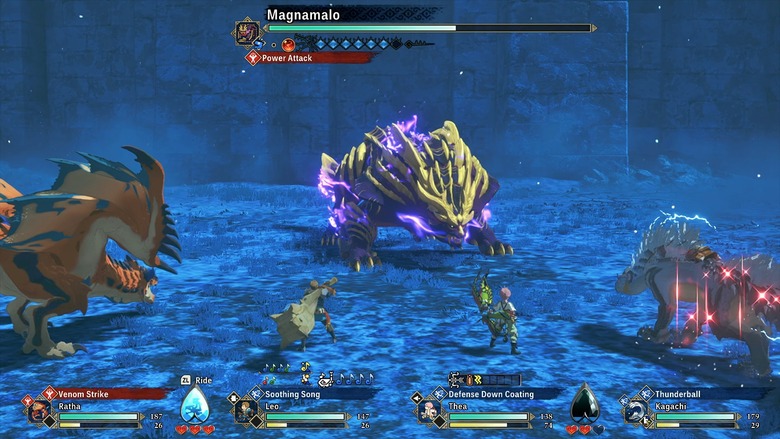
Dual-Element Monsties & Habitat Restoration
The biggest new feature in Monster Hunter Stories 3 is the ability to create dual-element monsties through the habitat restoration system . Unlike previous games where a monster’s element was fixed, you can now combine elements by releasing monsters into specific regions.
How Dual-Element Monsties Work
| Base Monstie | Original Element | Release Region | Result |
|---|---|---|---|
| Tobi-Kadachi | Thunder | Ice region | Thunder/Ice Tobi-Kadachi |
| Velocidrome | Neutral | Fire region | Fire Velocidrome |
| Rathian | Fire | Water region | Water/Fire Rathian |
| Rathian | Fire | S-rank ecosystem | Pink Rathian / Poison Rathian |
The process requires several steps. First, gather eggs for the monstie you want to transform. Hatch them, then release them into the appropriate habitat associated with your desired secondary element . After building up that region’s ecosystem rank to S, you’ll find new eggs containing dual-element monsties in that area .
The visual changes are dramatic—a Tobi-Kadachi that absorbs ice energy develops shimmering frost patterns across its scales . But more importantly, dual-element monsties gain access to skills from both elements and can exploit weaknesses that single-element monsters cannot .
Habitat restoration also unlocks special S-Rank variant monsties like Pink Rathian or Poison Rathian, which evolve from standard Rathian eggs after you’ve achieved maximum ecosystem rank .
Feral Monsters & Blightstone Reflection Combat
The new Feral Monsters serve as major boss encounters throughout the story. These corrupted creatures have been twisted by the petrification crisis and fight with entirely new mechanics . The most dangerous is their Blightstone Reflection ability—if you attack them with the wrong move type or target the wrong body part, they counterattack with massive damage .
This creates a puzzle-like combat system where you must carefully observe each Feral Monster’s attack patterns before committing to your actions . Hitting a reflected attack can instantly turn the tide of battle against you, while successfully avoiding reflections builds your Wyvernsoul Gauge faster .
The Wyvernsoul Gauge replaces the traditional Kinship Gauge from previous games. It fills based on successful head-to-head wins and correct reflection avoidance . When full, you can unleash devastating Union Attacks with your monstie that deal massive damage and often break body parts for rare materials .
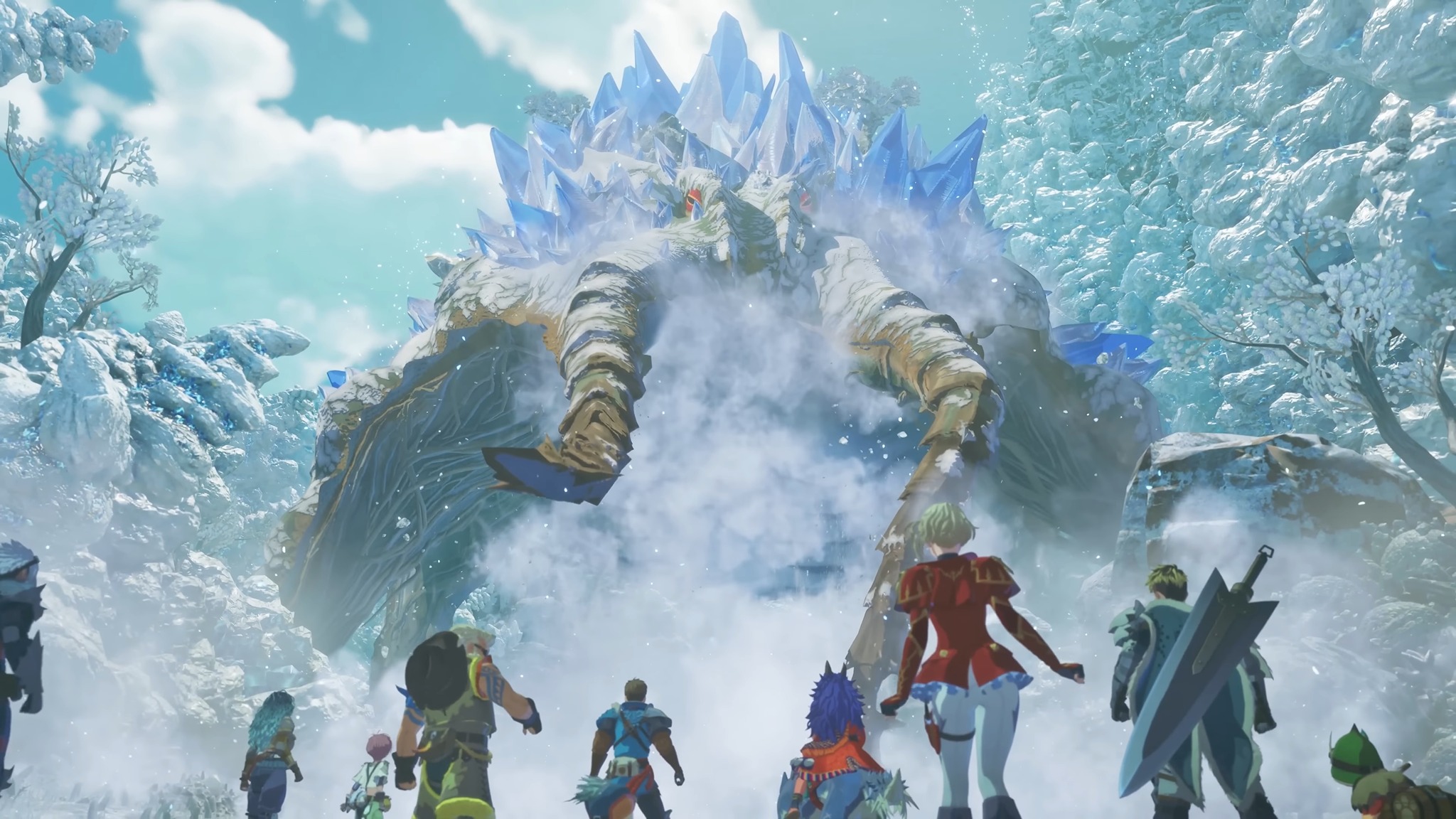
Character Roster & Party System
For the first time in the series, your party members are fully playable in combat alongside your monstie . The story follows Aura, the star rider of Azuria, joined by three distinct companions:
- Evan – An elder’s son carrying the weight of his family’s legacy
- Lars – An upbeat merchant with surprising combat abilities
- Amin – A mysterious stranger with ties to the petrification crisis
Each companion has unique Partner Skills that activate under specific conditions. Evan might provide defensive buffs, Lars can throw items for free, and Amin reveals enemy weaknesses . You can switch which companion accompanies you between quests, allowing you to tailor your party to upcoming challenges .
The game also introduces the Guild Card system, letting you customize your profile and recruit other players’ companions for solo quests . This creates a passive multiplayer element where you benefit from the community’s best-built monsties even when playing alone .