
THIS SECRET SYSTEM CHANGES EVERYTHING – How to Get Dual-Element Monsties in MH Stories 3
March 10, 2026

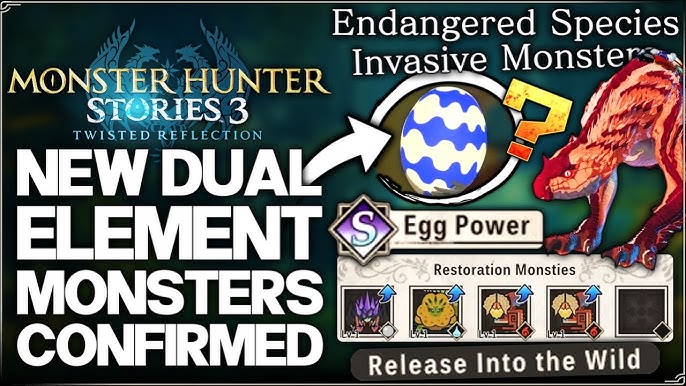
Monster Hunter Stories 3: Twisted Reflection launches on March 13, 2026, and its most ambitious new feature is the ability to create dual-element monsties through the Habitat Restoration system . Unlike previous games where a monster’s element was fixed at birth, you can now influence what element your monstie carries by manipulating the environment itself.
The process requires patience and strategy: you need to gather eggs, hatch monsties, release them into specific habitats, and raise that region’s ecosystem rank to S before new eggs with dual elements will appear . It’s a complete redesign of how monster collection works—turning the map itself into your progression system .
Here’s everything you need to know about getting dual-element monsties in Monster Hunter Stories 3.
How Habitat Restoration Works
Habitat Restoration is the core gameplay loop that replaces the simple egg-den system from previous Stories games. As captain of the Ranger Corps, your job is to preserve the ecosystem of Azuria by releasing monsters back into the wild .
When you hatch a monstie from an egg, you have a choice: keep it as a battle partner, or release it into its natural habitat. Releasing monsters serves two purposes:
- It stabilizes the local population of that species
- It raises the ecosystem rank of the region where you release them
Each area has its own ecosystem rank that increases as you release more monsters there. Higher ranks mean better egg quality when you return to that region’s nests, and eventually unlock the ability to find dual-element monstie eggs .
Dual-Element Monstie Creation Process
| Step | Action | Result |
|---|---|---|
| 1 | Gather eggs for desired base monstie (e.g., Tobi-Kadachi) | Hatch multiple specimens |
| 2 | Release them into habitat with target element (e.g., Ice region) | Ecosystem rank increases |
| 3 | Continue until region reaches S-rank | Dual-element eggs become available |
| 4 | Find and hatch eggs from that region | Dual-element monstie appears |
The visual changes are dramatic—a Tobi-Kadachi that absorbs ice energy develops shimmering frost patterns across its scales . You can preview how each elemental variant looks by cycling through options in your Monsterpedia before committing to the grind .
Which Monsties Can Become Dual-Element?
Not every monster can gain every element—the system has logical limits based on the creature’s biology. A Velocidrome (normally neutral) placed in a fire region can become a Fire Velocidrome, complete with orange-red coloration . A thunder-element Tobi-Kadachi released into an ice area becomes Ice Tobi-Kadachi, gaining ice attacks while keeping its thunder moves .
The process works best with monsters that have flexible elemental affinity. Some combinations are clearly designed to be fan favorites—the ice Tobi-Kadachi color scheme has already caught players’ attention for its aesthetic appeal .
For Rathian fans, there’s even more depth. By releasing standard Rathian into high-rank ecosystems, you can eventually unlock Pink Rathian or Poison Rathian as mutations of the base species . These aren’t just color swaps—they have different attack patterns and resistances.
Invasive Monsters & Retreat Battles
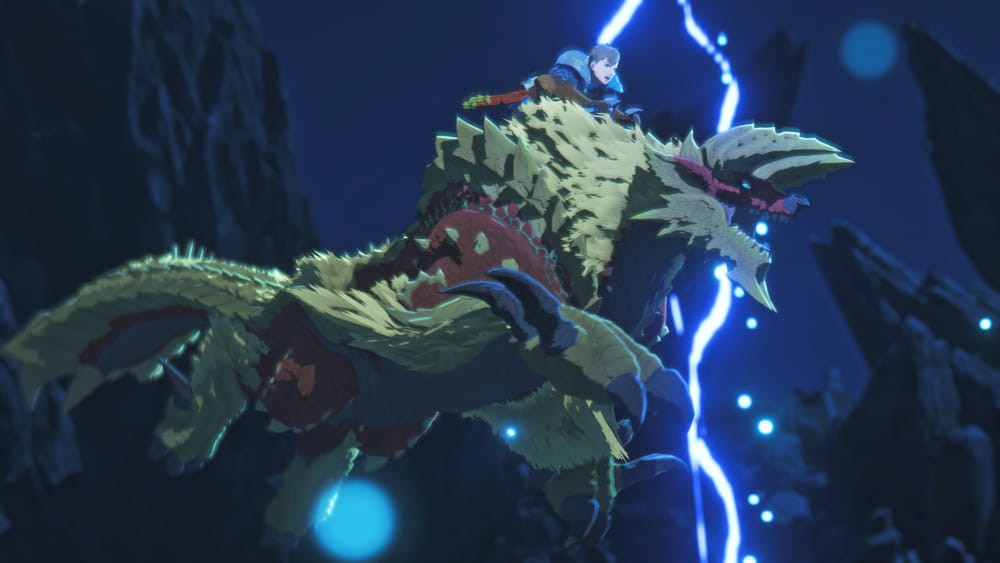
Habitat Restoration connects directly to another new mechanic: Invasive Monsters. These powerful creatures have overrun territories and driven native species to the brink . Standard combat won’t let you defeat them—instead, you must win special Retreat Battles where the goal isn’t killing, but forcing the invader back to its den .
Success in Retreat Battles lets you sneak into the invader’s nest while it sleeps and steal eggs containing rare species that were previously unavailable in that region . This creates a gameplay loop where you:
- Identify regions suffering from invasive species
- Fight Retreat Battles to push them back
- Steal eggs containing endangered monsters
- Hatch and release them to restore the ecosystem
- Unlock even rarer variants through higher ecosystem ranks
Monsters from Monster Hunter Wilds, including Arkveld, appear in Stories 3, further connecting the two game worlds.